The hidden costs of SaaS and how to avoid them
There is a SaaS for everything, accessible from anywhere and at any time, but at what cost? Software-as-a-service platforms are convenient, easy to use, and might appear cheap at first. However, SaaS spending can get out of hand quickly and remain unnoticed.
Gartner estimates that by 2027, 75% of employees will acquire and use tech outside IT’s visibility – up from 41% in 2022.
Don’t get me wrong. SaaS applications are essential. Getting this article written and published involved using at least five SaaS platforms: a certain online word processor, a writing assistant, an SEO tool, a graphic design platform, and a content management system.
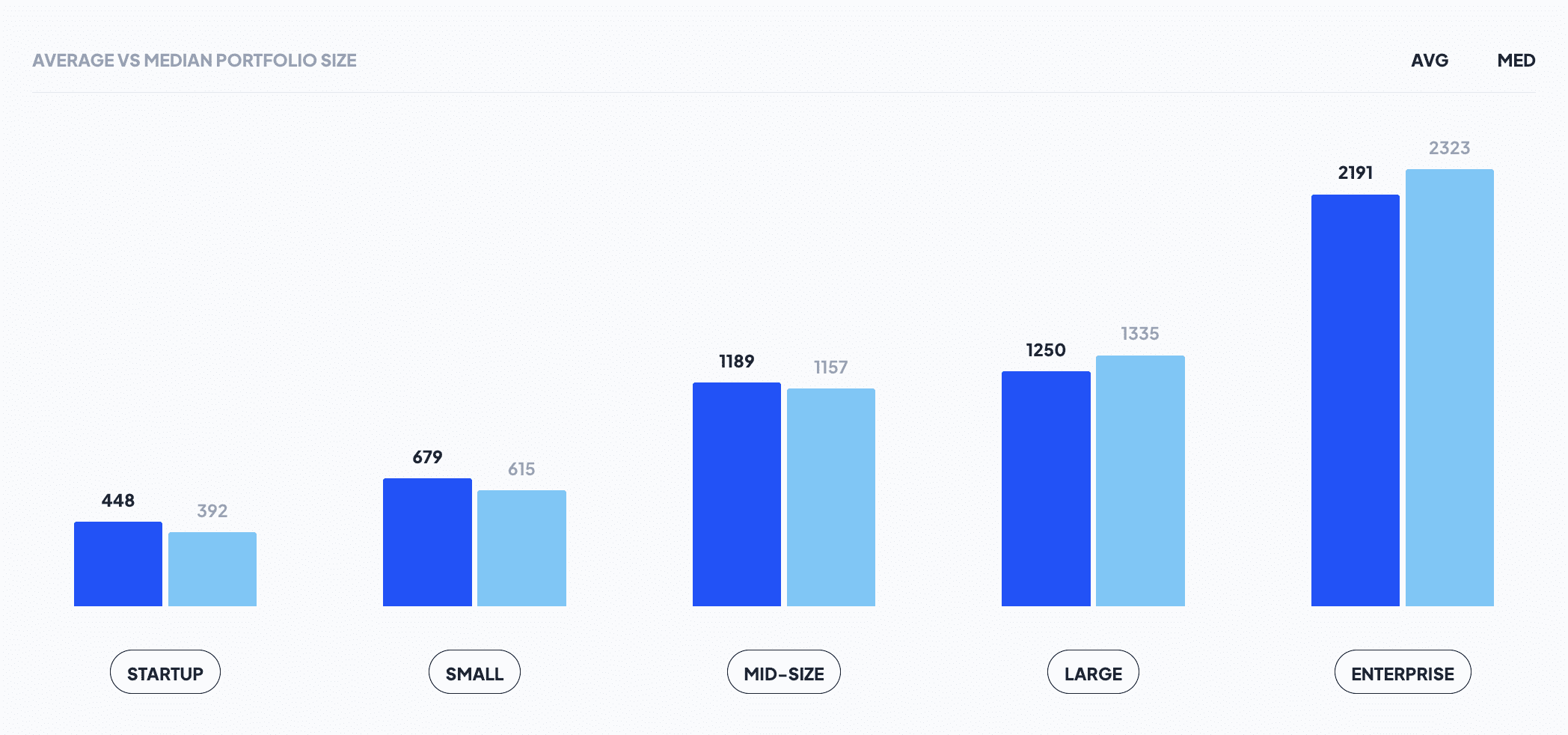
However, applications don’t grow in line with headcount, they expand exponentially. Startups and SMBs now manage an average of 746 applications.
With such scale comes complexity.
Across all company sizes, a typical employee uses around 40 different apps to do their job. If well managed, it can boost productivity. If not – it’s an ultimate waste of time and money.
What is “subscription creep”?
Subscription creep happens when a business accumulates multiple SaaS tools over time without realising the total financial impact. As teams independently add new subscriptions or upgrade existing ones, costs gradually increase, often without a thorough evaluation of whether these tools are still needed or are being fully utilised. This slow build-up of recurring costs can significantly drain the budget, especially when overlooked.
AI is the subscription creep accelerant
AI has accelerated many things, and the subscription creep is one of them.
In recent years, the number of AI-powered SaaS applications has exploded: from writing assistants and image generators to AI agents, coding tools, and meeting summarisers. Unlike traditional SaaS, AI tools are often adopted informally, at individual or team level, with low friction and low upfront cost. The result is that businesses are now accumulating AI subscriptions on top of their existing SaaS estate, frequently without IT or finance visibility.
The hidden cost here is twofold: the direct subscription cost, and the data risk. Many AI tools operate by sending organisational data to third-party models for processing. Without a centralised policy, employees may be sharing sensitive customer data, internal documents, or confidential code with AI platforms that have no data protection agreement in place.
How to avoid subscription creep
Many businesses unknowingly (or knowingly) bear the burden of underutilised SaaS, which leads to significant hidden costs. Small-to-medium-sized businesses are particularly vulnerable to subscription creep. Unlike large enterprises with dedicated IT and procurement teams, SMBs often lack oversight and visibility into SaaS spending.
1. Unused Features
Problem: Many companies subscribe to premium SaaS plans that offer a wide array of features, but often, only a few of them are actively used. This underutilisation results in paying for features that don’t provide any value, driving up costs unnecessarily. By failing to match plan features to actual needs, businesses waste money on functionality they don’t even require.
Solution: Assess if the current subscription level matches actual usage regularly. Use a free version (if available) or downgrade the subscription, if not fully utilised.
2. Duplicate Tools
Problem: In bigger organisations, it’s common for different teams to independently purchase SaaS tools with similar or overlapping functionalities. The classic example is when Jira is used for project management by technical teams, while Trello – by marketing and sales teams.
Another example is to do with an AI tool sprawl. Many businesses are simultaneously paying for ChatGPT, Copilot, Gemini, and Claude, often across different teams, without a consolidated view of which is actually used or whether one could serve all needs.
This duplication drives up costs by paying for multiple services that essentially do the same thing. Without a coordinated approach, these redundant tools go unnoticed, adding layers of complexity and unnecessary expense.
Solution: Identify and consolidate the tools with similar or overlapping functionalities. Develop a company-wide strategy to oversee SaaS usage across all departments and teams.
3. Licence Over-Purchasing
Problem: Many businesses purchase more licences than they need, either by overestimating the number of sits or due to poor tracking of actual platform usage. This leads to companies paying for inactive or unused accounts.
Solution: Audit licences and align them with real-time usage to cut back on the excess spend. Ensure you are paying only for the active users who engage with the platform.
4. Auto-Renewals Without Oversight
Problem: Many SaaS subscriptions are set to auto-renew, and without proper oversight, businesses can continue to pay for tools that are no longer necessary. These automatic renewals often go unnoticed, leading to ongoing payments for unused or redundant services.
Solution: Implement a subscription management process that monitors renewal dates and reviews the relevance of each service to avoid the costly oversight.
5. Subscription Price Increase
Problem: The SaaS inflation rate is at its highest point ever. It’s now nearly 5x higher than the standard market inflation rate of G7 countries. SaaS providers keep increasing their subscription fees to align with inflation, platform upgrades and additional AI-enabled features, which you might not even need (see Point 1).
AI has become a major contributor to SaaS inflation, with a so-called “AI tax” driving the subscription cost and adding extra usage-based spend on top (see more below).
Solution: Speak up, fight back and negotiate. If that doesn’t work, thankfully, there is always a SaaS alternative to an unreasonably priced SaaS.
6. AI Usage-Based Pricing
Problem:Traditional SaaS subscriptions were predictable: a fixed fee per user per month. Many AI-powered tools have introduced consumption-based pricing: you pay per API call, per token processed, or per action completed. When usage is low, this seems cheaper than a flat fee. When a team actually integrates the tool into daily workflows, costs can spike unexpectedly and significantly.
Solution: Before adopting any AI tool with usage-based pricing, project the cost at realistic usage levels, not just demo-level activity. Set spending caps where the platform allows, and review AI tool costs monthly rather than quarterly.
25% CAGR
/ SaaS spend-per-employee is growing at a 25% CAGR with up to 30% of licenses unused or underused according to Gartner
The SaaS balancing act
Getting the most of your SaaS investments is a balancing act. Some companies use spreadsheets in an attempt to understand and balance their SaaS spend. For those of us who prefer to fight fire with fire, there are dedicated SaaS platforms for SaaS spend management.
There are a few other tactics you might want to consider incorporating into your SaaS spend strategy.
Contracts Negotiation
Many SaaS providers offer flexible plans that can be adjusted based on actual usage or a certain number of “sits”. By negotiating contracts, you can avoid paying for unused features or unnecessary licences.
Training and Adoption
Lack of proper training can result in underutilisation of SaaS tools, as employees may not be aware of or comfortable with all available features. Offering training can maximise tool adoption and ensure teams are getting the best from SaaS platforms.
Regular SaaS Audits
Regular audits can help identify underutilised or redundant SaaS subscriptions. Make it a quarterly habit to review all active subscriptions to eliminate wasted spending on tools that no longer meet business needs or are simply underused.
Centralised Subscription Management
Centralising the management of all SaaS subscriptions provides a clear overview of the tools being used across the company. This system helps prevent overlapping purchases and enables businesses to track all active subscriptions, making it easier to spot inefficiencies.
In 2026, “keeping it simple” is harder than ever. The AI tools and agents explosion means the average employee now has access to more apps than at any point in history – many of them free to start, cheap to adopt, and invisible to IT. The discipline of asking “Do we really need this?” applies as much to the AI assistant your team signed up for last week as it does to the workflow designer tool nobody logs into.
The following advice of keeping it simple is still the right framework. Apply it more often.


Kateryna Novozhylova
Hi! I'm Kateryna Novozhylova, co-founder at Fractional Teams. I write about product, marketing and tech.